
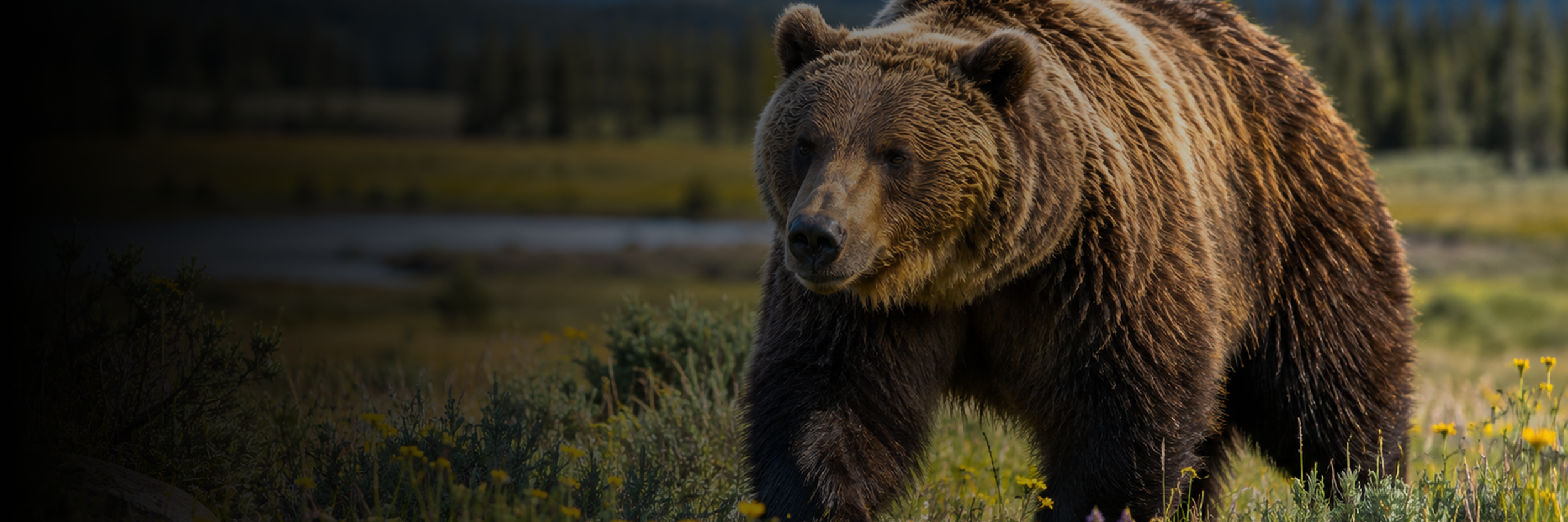
bears and wildlife safety in yellowstone.
Wildlife Safety In brief.
Yellowstone's animals are wild, and the park's rules exist because people get hurt when they forget that. Stay at least 25 yards from bison, elk, moose, deer, bighorn sheep and coyotes, and at least 100 yards from bears, wolves and cougars; those are regulations, not suggestions. Bison have injured more people here than any other animal, nearly always because someone walked up to one. Bears are the backcountry risk, and the answer is to hike in groups, make noise, carry bear spray and know what to do in an encounter. The ground in thermal areas is a separate hazard, and the park says more than twenty people have died in its hot springs. None of this should keep you off the trails. It should just change how you walk them.
This page is one part of our full Yellowstone guide. It covers how not to get hurt: distances, what each animal does, what to do when a bear charges, how to carry and use bear spray, how to store food, and the thermal-ground rule. If what you want is to find animals rather than avoid them, the place to look is our page on where and when to see Yellowstone's wildlife.
The park puts the core of it in one sentence, repeated in the news releases it issues after someone is hurt by a bison: "Wild animals can be aggressive if people don't respect their space." Most of what follows is detail on how to give them that space.
Distances, and why they matter
Park regulations require you to stay at least 100 yards from bears, wolves and cougars and at least 25 yards from every other large animal. If an animal moves toward you, you move away to keep the distance; the obligation is yours, not the animal's. Twenty-five yards is about the length of two school buses. A hundred yards is a football field. On a boardwalk or a trail, that often means going back. The park's safety page is direct about it: "If need be, turn around and go the other way if a bison walks within 25 yards." The park also points out that binoculars and a telephoto lens will always give you a better look than walking closer would, and a spotting scope is how you'll see most of what the Lamar Valley has to offer.
Bison
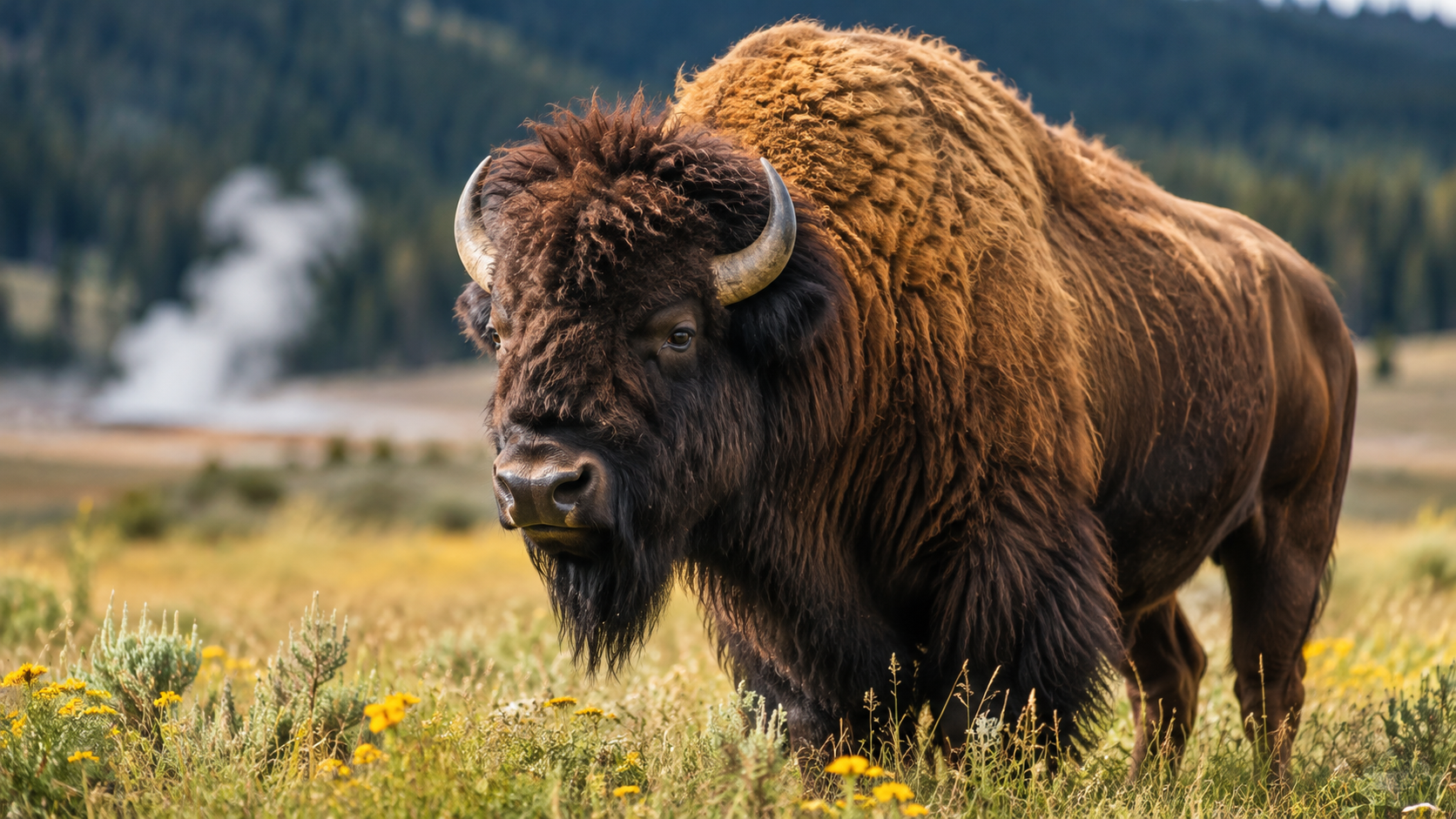
Bison are the animal people underestimate. They look placid, they graze beside the road, and a bull weighs up to a ton and can run three times faster than a person. The park states plainly that bison have injured more people in Yellowstone than any other animal, and the news releases it issues after each incident tell the same story: someone approached too closely and the bison responded. The park's own rule of thumb is never to approach a bison for a photo. There was one injury in 2023, two in 2024, two in 2025, and as of late June 2026 one that year. In every case the park's follow-up asks visitors to keep 25 yards. The rut, from late July through August in the Lamar and Hayden valleys, is when bulls are most unpredictable. A bison that raises its tail, paws the ground, bobs its head, or bluff charges is telling you something; the park's instruction is not to stand your ground but to walk or run away.
On the road, bison use the pavement, and traffic jams behind a herd are a normal part of a Yellowstone day. Stay in the car when they're close, drive slowly, don't honk, and don't try to push through a herd. Give them the road.
Bears
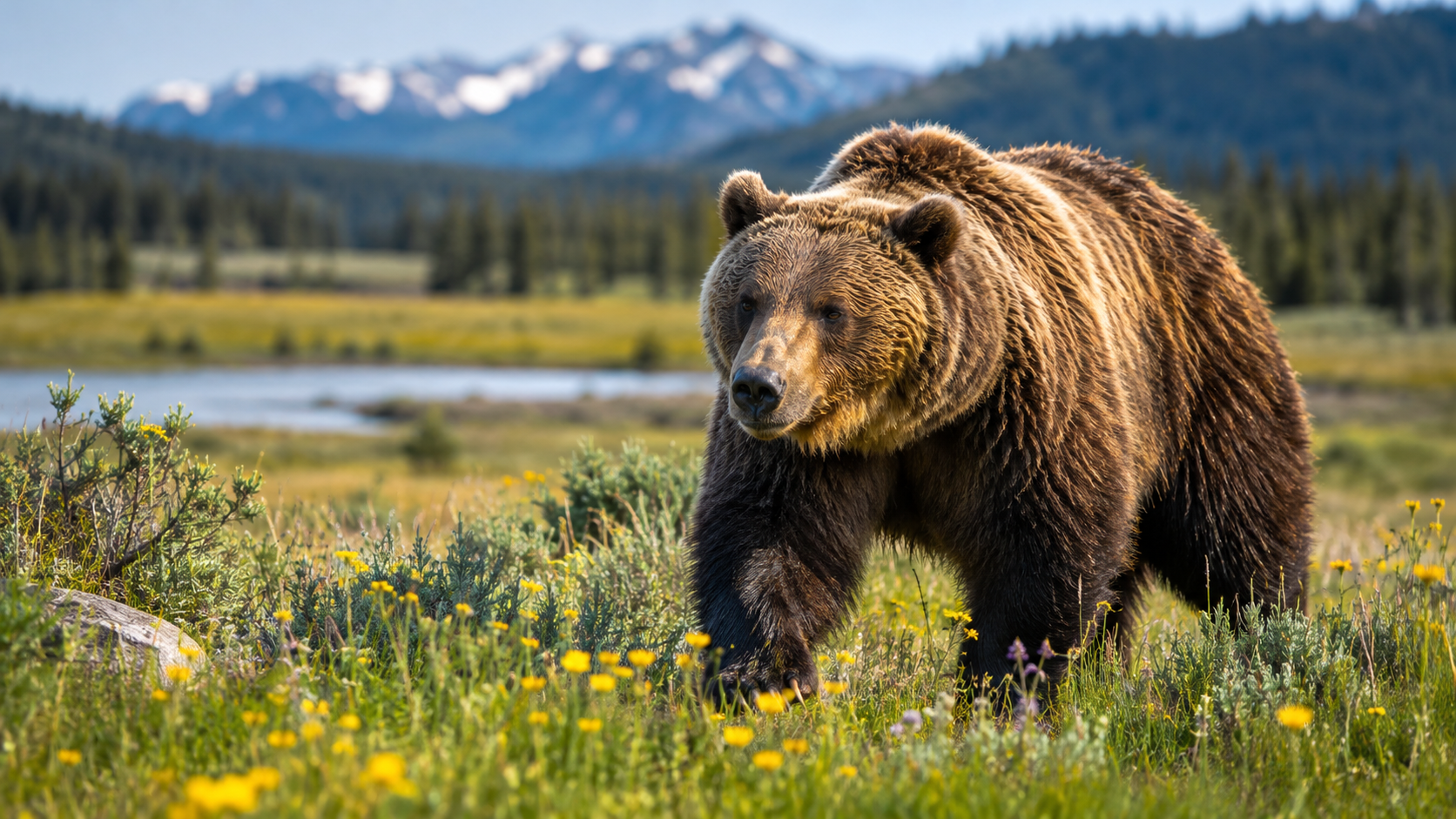
Yellowstone has both grizzly and black bears across the whole park. Black bears are the less dangerous of the two; the Park Service describes them as "generally much less aggressive than grizzly bears," and notes that they climb trees to get themselves and their cubs out of trouble. Most of the bear injuries the park records are from grizzlies, and the typical case is a hiker who surprises a female with cubs in the backcountry. Grizzlies have a shoulder hump, a dished face and long front claws; black bears have no hump, a straighter profile, shorter claws, and can be black, brown or cinnamon, so color is not a reliable guide. The park has a comparison page with photographs that's worth a look before a trip.
Avoiding the encounter
Avoiding an encounter is most of the game. The park's guidance is to hike in groups of three or more and in daylight, not at dawn, dusk or night, when grizzlies are most active. Stay on maintained trails; the park's research shows that people hiking off-trail are more likely to be attacked. Call out "Hey bear!" now and then where you can't see far ahead, watch for fresh tracks and scat, and keep bear spray where you can reach it. If you come across a carcass, leave the way you came and report it to a ranger, because bears guard them. The park's own numbers on group size are blunt: since 1970, 91 percent of the people injured by bears in Yellowstone were hiking alone or with one other person, and only 9 percent were in groups of three or more. Never run from a bear.
If you meet one
If you do meet a bear, Yellowstone's advice depends on what the bear is doing, not on which species it is. If it hasn't noticed you, leave quietly the way you came. If it has, keep your group together, pick up small children, and back away slowly, without running or sudden movements, while you draw your bear spray and remove the safety tab. If it charges, stand your ground and spray when it comes within 60 feet; many charges are bluffs that stop short. If the bear leaves, leave the area too, at a walk.
If a bear makes contact, the park's instruction is to play dead. Drop to the ground on your stomach, keep your pack on to protect your back, and clasp your hands over the back of your neck with your elbows covering the sides of your face. Stay still and quiet so the bear decides you aren't a threat. When it has gone, wait several minutes and listen before you move, then walk out of the area.
A curious or predatory bear is a different situation. Instead of charging, it approaches slowly and keeps coming. Gather your things, especially food, and walk to a car or building. If you can't, group up with the people around you, yell at the bear, and spray it once it is within 60 feet. If a curious or predatory bear attacks, the park's advice is to fight back as hard as you can, with rocks, sticks or anything else you can reach.
You may read elsewhere that the advice differs for black bears. Yellowstone's own guidance goes by the bear's behavior rather than its species, and this guide follows the park. Report any run-in with a bear to a ranger, however minor, and call 911 if you have service. The park's backcountry safety page sets all of this out; read it before any trip.
Bear spray
Bear spray is the tool. The park says it is more than 90 percent effective at stopping aggressive bear behavior, and since 2016 it has run a campaign, "A Bear Doesn't Care," to get more people to carry it, after park researchers found that only about 28 percent of backcountry visitors did. If a bear charges, the park says to remove the safety clip, point the nozzle slightly down, adjust for any crosswind, and spray when the bear is 30 to 60 feet away, so the cloud forms a wall between you. A bear can cover 40 feet in a second, and the cloud needs that head start to work. Keep spraying until the bear changes direction, then leave the area without running. Each person in your group should carry a can, in a holster on the hip or chest where it can be reached quickly, not in a pack. Take it out and carry it in your hand in thick brush or anywhere you can't see far ahead. Check the expiration date, don't leave it in a hot car (the park warns a canister can explode at 120°F), and buy it after you fly in, since it can't go on a plane. You spray it at a charging bear, not on yourself or your gear; it does nothing as a repellent. An authorized concessioner, Bear Aware, rents it from kiosks at Canyon Village and Old Faithful. We sell it in Bozeman.
Food
Food is the other half. In campgrounds, all food, coolers, cookware, trash, toiletries and anything with a scent must be in a hard-sided vehicle or a bear box whenever it isn't in use, including while you sleep and while you're away for the day. Coolers aren't bear-proof. In the backcountry, every designated site has either a metal bear box or a food pole; for the poles you bring your own rope, at least 35 feet of it, and hang everything with a scent, which means food, trash, toiletries, cookware and the clothes you cooked in. Hard-sided bear canisters approved by the Interagency Grizzly Bear Committee are also accepted; soft-sided ones are not. The park asks you to sleep at least 100 yards from where you cook, eat and store food, and most sites are laid out with that in mind. Hang food whenever it isn't in your hands, including during the day if you leave camp. A bear that learns people mean food is a bear the park eventually has to kill, which is the part of the rule people don't think about.
Elk
Elk are everywhere, including on the lawns at Mammoth, and they hurt people in two seasons. In the fall rut, from late August or early September into October, bull elk at Mammoth are aggressive and have charged cars and people; stay well back, stay near a vehicle or building, and don't walk between a bull and his cows. From May into early July, cows with newborn calves will charge anyone who comes near a calf, including people who never saw it in the grass; at Mammoth they often hide calves beside cars and buildings. The 25-yard rule applies, and in those two seasons it's worth doubling.
Wolves, moose, coyotes and the rest
No wolf has injured a person in Yellowstone since their return in 1995, and the risk to visitors is close to zero. The 100-yard rule keeps it that way: the park works hard to keep wolves wary of people, because a wolf that gets comfortable around people is a wolf the park ends up removing. Watch them from the Lamar Valley pullouts with a scope. Moose are rarer in the park than people expect, fewer than 200, and the park describes them as unpredictable, especially cows with calves; look for them in marshy meadows, along lakeshores and rivers, and give them room and an escape route. Coyotes and foxes become bold when fed, and feeding any animal in the park is illegal. Bighorn sheep, pronghorn and deer are not a safety concern at a distance but will leave if approached, which spoils it for everyone behind you.
Thermal areas
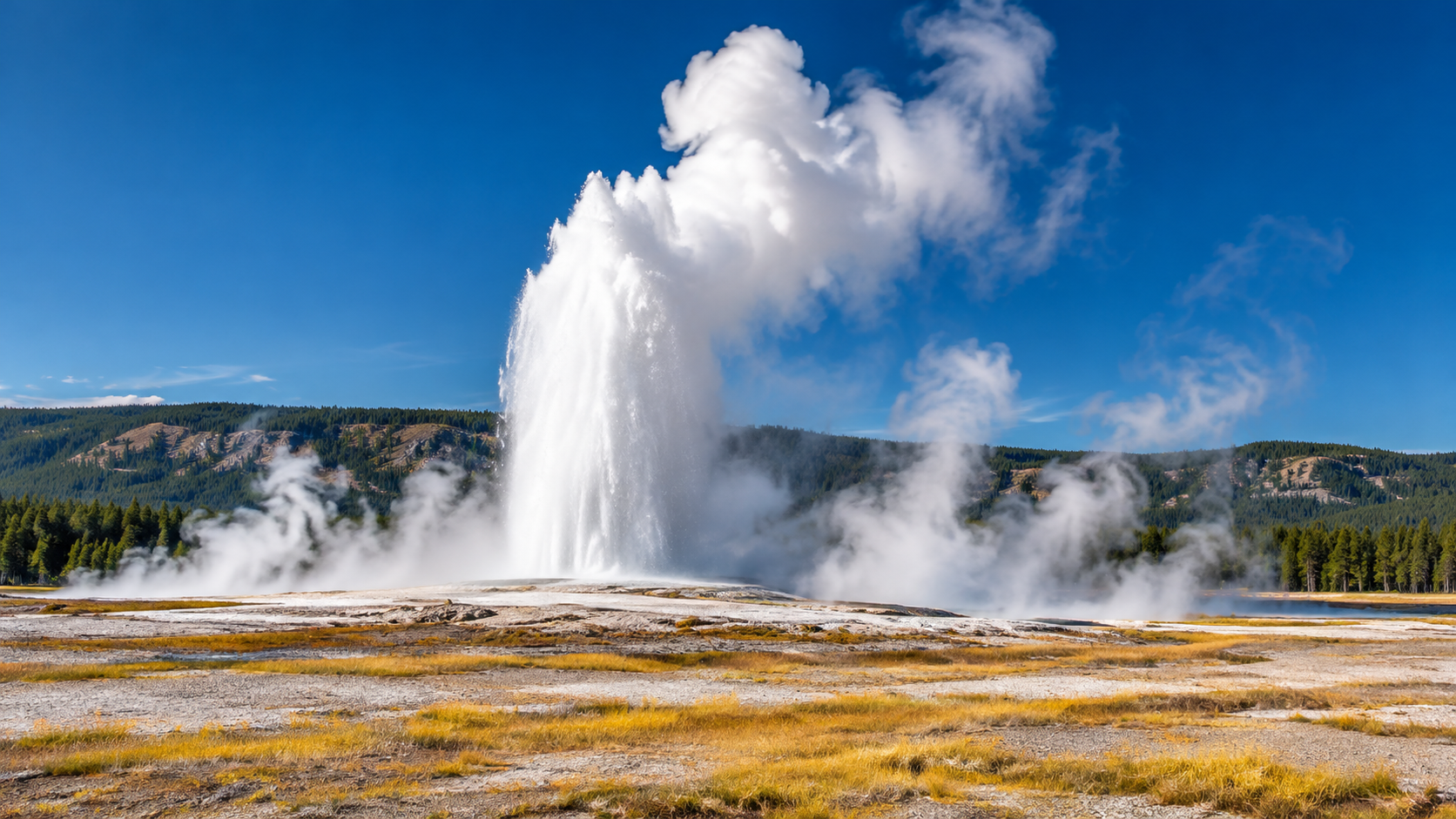
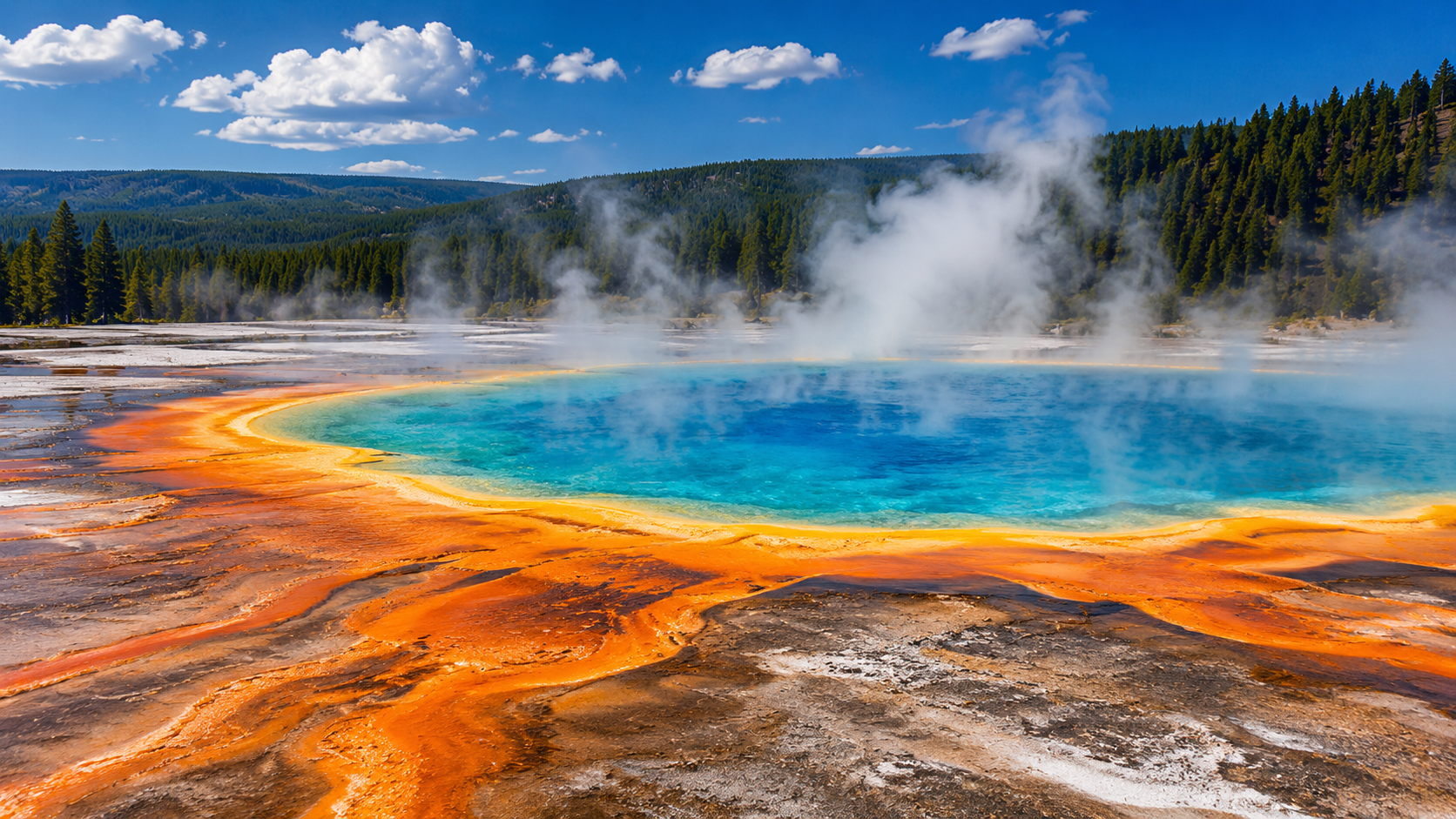
The park's Old Faithful day-hike handout says it in two sentences: "The thin ground in these areas breaks easily, and often overlies scalding water. Stay on the trail." More than twenty people have died in Yellowstone's hot springs since the park was established. The water in the park's hot springs often reaches the boiling point, and at Norris it is acidic as well; there is no swimming or soaking in any thermal feature. The one river spot where hot water mixed with cold, the Boiling River near Mammoth, has been closed since the 2022 flood changed the river. The Firehole Swim Area on Firehole Canyon Drive is a cold-water river swim, not a hot spring, and it usually stays closed for high water until mid summer; check the park's swimming page for current status. Keep children within arm's reach on boardwalks. Pets are not allowed in thermal areas at all. On a still day some basins collect gases that can make you dizzy; if that happens, walk out. In backcountry thermal areas, where there are no boardwalks, the rule is the same: stay on the trail, and if there's no trail, stay out.
Driving
Wildlife jams are part of the experience, and the rules are simple. Pull completely off the road into a pullout before you stop; never stop in the lane. Stay in or next to your vehicle when animals are near the road. Don't walk toward an animal to get a better photo, which is how most of the bison incidents begin. Watch for animals on the road at dawn, dusk and night, and keep to the 45 mph limit. If a bear approaches or touches your car, the park's advice is to honk and drive away. If it's a bison, do the opposite: don't honk, and wait for it to move.
Questions people ask us
Do I need bear spray in Yellowstone? Yes, on any trail. The park says bear spray is more than 90 percent effective at stopping aggressive bear behavior and asks every hiker to carry it and know how to use it. It can't be flown in, so buy or rent it on arrival.
How do I use bear spray? Each person should carry a can, in a holster on the hip or chest, not in a pack. If a bear charges, remove the safety clip, point the nozzle slightly down, adjust for any crosswind, and spray when the bear is 30 to 60 feet away so the cloud forms a wall between you. Keep spraying until the bear changes direction, then leave the area without running. Ask at a visitor center or at the Bear Aware rental kiosks at Canyon and Old Faithful if you want to see how a canister works before you need it.
Where can I buy or rent bear spray? Outdoor shops in Bozeman, including ours, and stores in Gardiner, West Yellowstone, Cooke City, Cody and Jackson sell it, as do gift shops, general stores and service stations inside the park. Bear Aware, an authorized concessioner, rents it from a kiosk next to the Canyon visitor center and a yurt in the Old Faithful area.
What do I do if I see a bear on the trail? If it hasn't noticed you, leave quietly the way you came. If it has, keep your group together, pick up small children, and back away slowly without running, with your spray out and the safety off. If it charges, stand your ground and spray when it comes within 60 feet. If a bear makes contact, play dead: lie on your stomach, keep your pack on, clasp your hands over the back of your neck, and stay still and quiet until it leaves. A bear that approaches slowly and keeps coming is curious or predatory, which is different: walk to a car or building if you can, group up and yell if you can't, and if it attacks, fight back with everything you have. Yellowstone's guidance goes by what the bear is doing, not whether it's a grizzly or a black bear, and that's what we follow. Report any run-in to a ranger. The park's backcountry safety page covers every case.
How far should I stay from bison? From bears and wolves? At least 25 yards from bison, elk, moose, deer, bighorn sheep and coyotes. At least 100 yards from bears, wolves and cougars. These are regulations. If an animal approaches you, you move.
Which animal injures the most visitors? Bison, by the park's own account, and nearly always because someone approached too closely; the park's rule of thumb is never to approach a bison for a photo. They can run three times faster than you.
Are bear bells effective? The Park Service doesn't recommend relying on them; a bear often won't hear a bell until you're already too close. Your voice carries farther and tells a bear what you are, so talking, clapping or calling out in thick cover works better, and neither replaces bear spray.
Can I carry a gun in Yellowstone? Under a federal law that took effect in 2010, visitors who can legally possess a firearm may carry one in the park in accordance with state law, and since the park spans Wyoming, Montana and Idaho, that depends on where you're standing. Firearms can't be brought into federal buildings such as visitor centers, and hunting and discharging a weapon are prohibited. The Interagency Grizzly Bear Committee, which coordinates grizzly management across the region, says bear spray has a better record of stopping bears than any other method, firearms included, and has never caused a fatality.
Where are the best places to see wildlife? The Lamar Valley and the Hayden Valley at dawn and dusk, for bison, elk, bears and wolves. Mammoth for elk, especially in fall. The northern range in winter for wolves and bighorn sheep. Bring binoculars; the animals are usually far away, which is as it should be. Our wildlife page goes into where and when.
Can I feed the animals? No. It's illegal, it's dangerous, and an animal that comes to depend on people for food can turn aggressive and may have to be killed. That includes squirrels and birds.
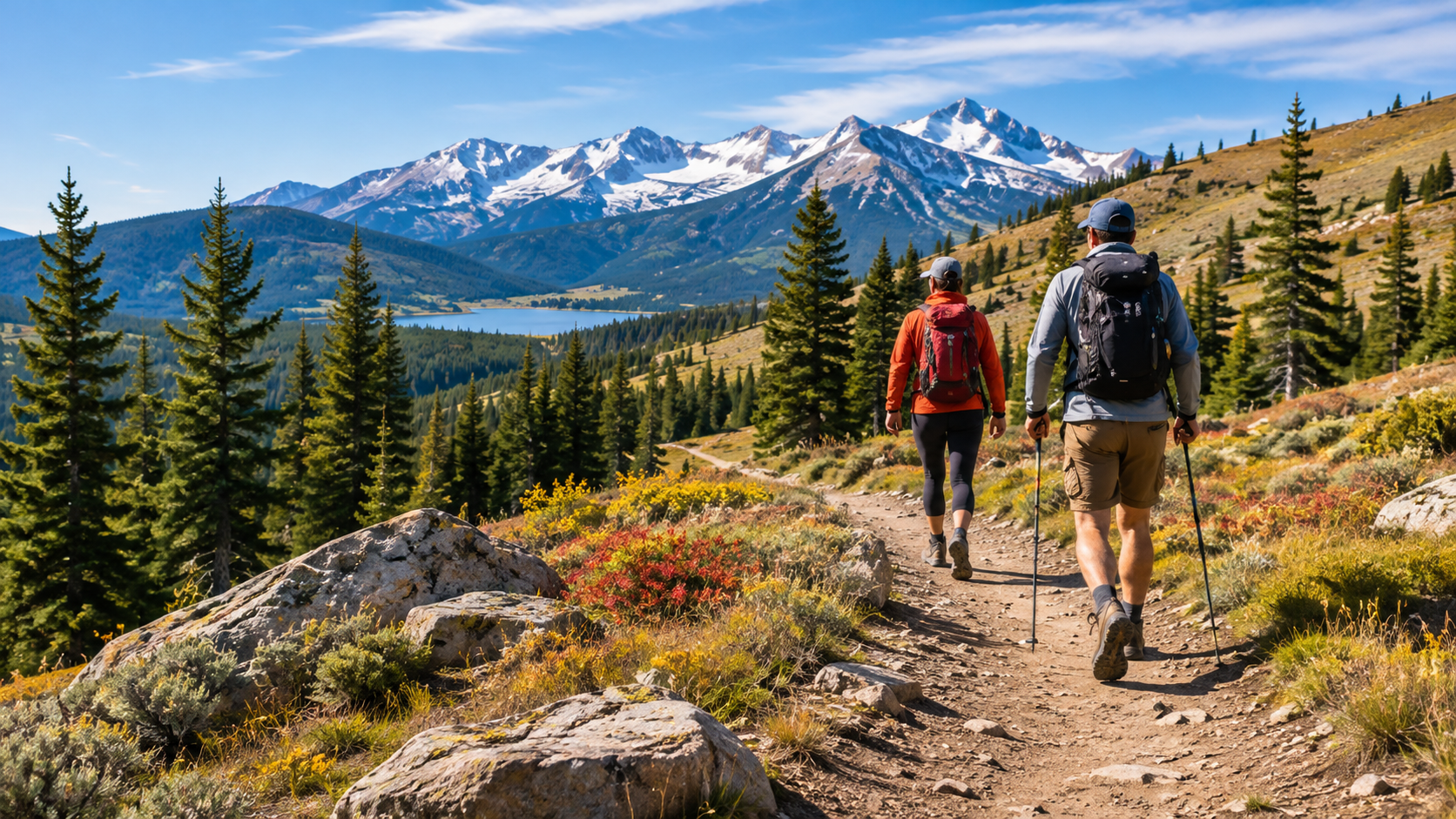
Yellowstone in One Day.
Make the most of a day in the park from any entrance.
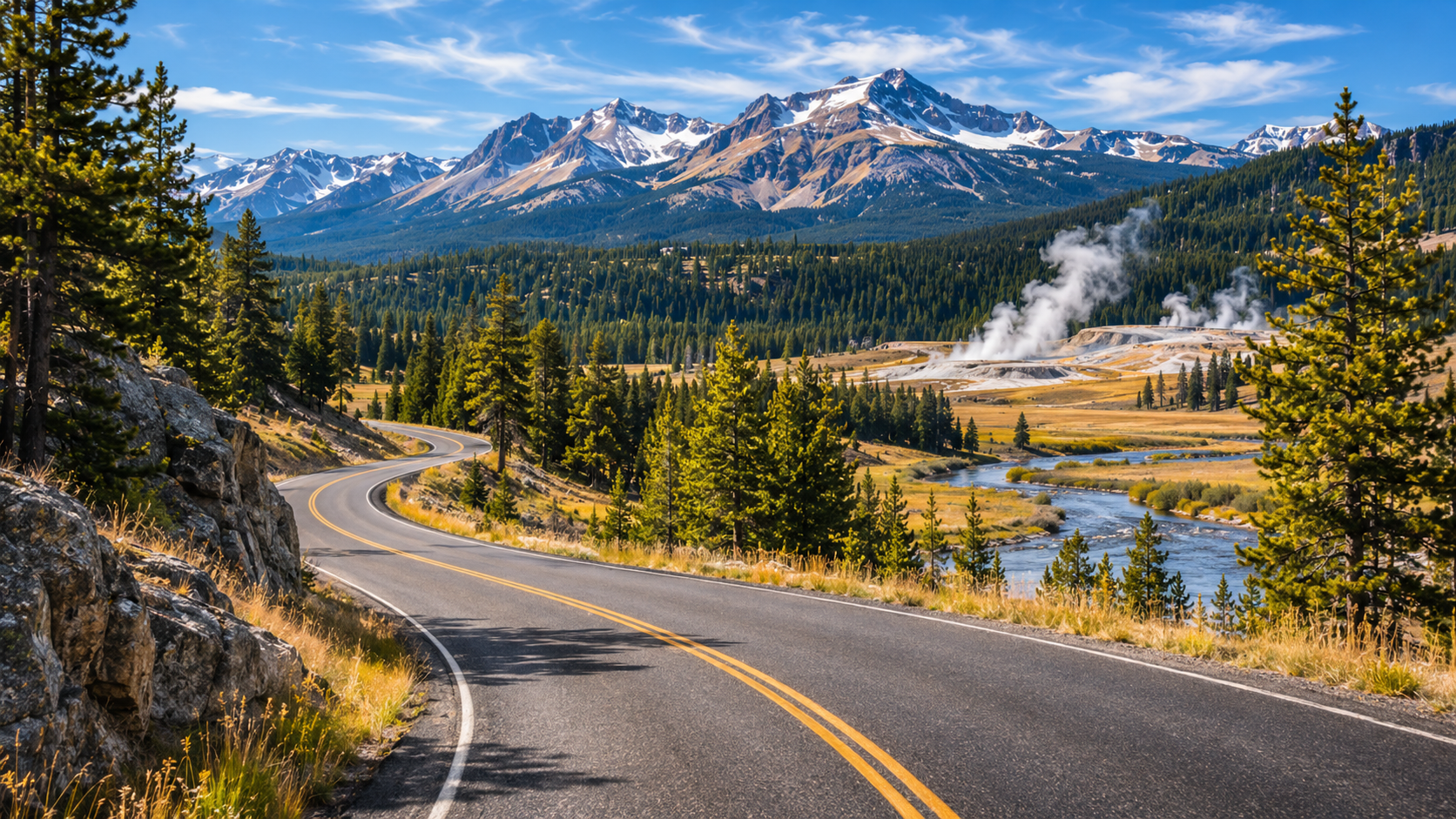
GRAND LOOP ROAD.
A section-by-section guide to the park's iconic drive.
Where to see wildlife.
The best areas and times to spot Yellowstone's animals.
BOZEMAN to
yellowstone.
The best route, drive time, and tips for a smooth trip.
FAQs.
Answers to common Yellowstone questions.
Best TIME TO VISIT.
Weather, crowds, and seasonal highlights.
Bear & wildlife safety.
Stay safe, respect wildlife, and be a responsible visitor.
The volcano, explained.
The science behind Yellowstone's supervolcano.