
People-Powered Winter in Yellowstone
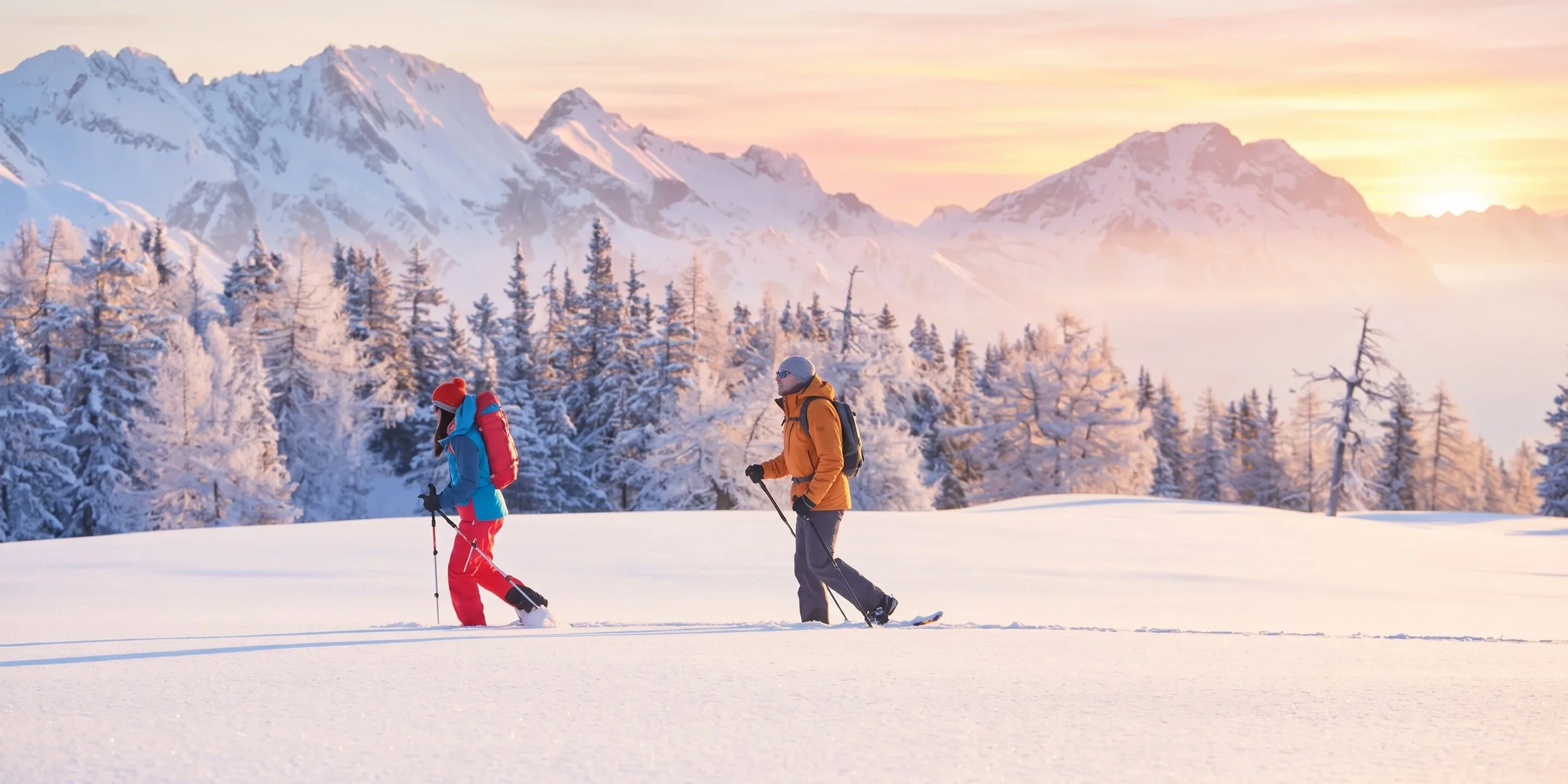
People-Powered Winter in Yellowstone: A Guide to Skiing, Snowshoeing and Hiking the Park
You can explore Yellowstone in winter on skis, snowshoes, or foot, and for many Bozeman locals it is the best season to do it. From mid-December through mid-March the interior roads close to cars, the summer crowds vanish, and the park opens up to over-snow travel. Thermal basins go quiet, trailheads sit empty, and bison move through steam against a white landscape.
Getting around under your own power means knowing how access works, where non-motorized routes fit alongside snowcoaches and snowmobiles, and how to stay safe in sub-zero terrain. This guide covers all three.
Quick Answers
- Over-snow season runs mid-December through mid-March.
- The North Entrance at Gardiner is the only entrance plowed for cars in winter. It is about 90 minutes from Bozeman.
- Snowmobiles and snowcoaches stay on groomed roads with a 45 mph speed limit. Most ski and snowshoe trails are non-motorized.
- Carry bear spray and microspikes. Keep 100 yards from bears and wolves, 25 yards from everything else.
How Do You Get Into Yellowstone in Winter Without a Snowmobile?
Drive to the North Entrance at Gardiner. It is the only park entrance kept plowed for regular wheeled vehicles year-round, and it puts you at Mammoth Hot Springs with ski and snowshoe trails starting right from the parking areas. Everything else requires over-snow transport.
- The North Entrance (Gardiner and Mammoth): Visitors from Bozeman or Livingston drive straight to Mammoth Hot Springs, making it the primary, unconstrained gateway for day trips, winter hiking, and cross-country skiing around Fort Yellowstone and the Upper Terraces. Check conditions on the NPS Yellowstone Road Status page before you leave.
- Over-Snow Entrances (West, South, East, and Northeast): To reach the park interior, such as Old Faithful or Canyon, visitors arrive by authorized commercial snowcoach, guided snowmobile, or one of a limited number of non-commercially guided snowmobile permits. Start with the Non-Commercially Guided Snowmobile Access Program page for permit rules and the lottery timeline. Skiers and snowshoers often book a snowcoach drop-off to reach remote interior trailheads.
Review the official NPS Yellowstone Winter Guide for current season dates and over-snow vehicle rules before planning the trip.
How Do Skiers and Hikers Avoid Snowmobiles in Yellowstone?
Mostly by never sharing the same ground. The vast majority of ski and snowshoe routes are non-motorized, and where human-powered and motorized travel do meet, the park controls the mix with design and enforcement:
- Separated Trail Systems: The prime cross-country ski and snowshoe routes, such as the trail systems around Mammoth, Blacktail Plateau, and specific backcountry tracks, are completely non-motorized. Snowmobiles and snowcoaches are confined to designated groomed park roads.
- Roadway Etiquette: When a route runs along or next to a groomed over-snow road, over-snow vehicles have the right-of-way, but operators are bound by speed limits (45 mph maximum, often lower) and single-file rules.
- Auditory and Visual Awareness: Modern commercial and permitted snowmobiles in Yellowstone must meet Best Available Technology (BAT) emission and sound standards, so they are far quieter than older machines, but engine noise still carries across frozen basins. Skiers and hikers can hear approaching traffic and step to the packed margin of the road or track.
- Strict Enforcement: Rangers actively patrol park boundaries and corridors. Off-road snowmobiling or unauthorized motorized travel into non-motorized zones carries heavy federal fines, which keeps backcountry corridors secure for human-powered recreationists.
Where Are the Best Cross-Country Ski and Snowshoe Routes in Yellowstone?
The best people-powered routes cluster around Mammoth, the Upper Geyser Basin, and the Tower-Roosevelt area. Each offers something different:
- Mammoth to Norris (Bunsen Peak Road and Service Roads): Excellent rolling terrain for cross-country skiing and snowshoeing when snow conditions allow, with sweeping views of the frozen landscape.
- Upper Geyser Basin (Old Faithful Area): Walkers and snowshoers can use cleared or packed boardwalk networks to view Old Faithful, Castle Geyser, and Morning Glory Pool without the summer crowds.
- Tower-Roosevelt Corridors: Ideal for cross-country skiers seeking undulating terrain and prime opportunities to spot winter wildlife like bison and elk along open meadows.
To map these routes and see the trail networks, download official winter maps from the NPS Yellowstone Maps collection.
What Gear Do You Need for Winter Hiking in Yellowstone?
Traction, layers, and bear spray. Winter in Yellowstone combines icy boardwalks, hard aerobic effort, and wildlife under severe seasonal stress, so each piece of gear solves a specific problem:
- Traction: Microspikes or rugged traction devices are essential for walking icy boardwalks and packed thermal paths. Trekking poles with snow baskets add stability.
- Layering System: Winter aerobic output generates substantial moisture. Use a moisture-wicking merino wool base layer, a breathable insulating mid-layer (such as a high-loft fleece or a lightweight synthetic like the Patagonia Nano Puff), and a weather-resistant, wind-blocking outer shell.
- Wildlife and Thermal Safety: Maintain legal viewing distances (at least 100 yards from bears and wolves, 25 yards from all other animals) and always carry bear spray. Never step off designated boardwalks or trails into thermal areas; the crust is fragile and the water underneath is scalding.
Check current road status, weather forecasts, and ranger reports through the National Park Service before heading out.
Need the right layers, traction, and gear for a human-powered winter trip to Yellowstone? Crazy Mountain Outdoor Company has you covered with Bozeman's best selection of Patagonia and other great brands, right on Main Street.
Helpful Links
Shop Patagonia for the right gear for your Yellowstone adventure at Crazy Mountain Outdoor Co.
Download official park maps, including winter visitor maps and interior trail guides, from NPS Yellowstone Maps.
Review winter season dates, road openings, and over-snow travel regulations in the NPS Yellowstone Winter Guide.
Check which entrances are plowed and which interior roads are restricted to over-snow vehicles on the NPS Yellowstone Road Status page.
Learn about permits and the lottery for exploring beyond the plowed corridors through the Non-Commercially Guided Snowmobile Access Program.
Planning a motorized trip instead? Read our companion guide, Yellowstone Motorized Winter Travel.
